Mythologies of the Aztec/Mixtec Tribes

The Mixtecs (/ˈmiːstɛks, ˈmiːʃtɛks/), or Mixtecos, are indigenous Mesoamerican peoples of Mexico inhabiting the region known as La Mixteca of Oaxaca and Puebla as well as La Montaña Region and Costa Chica Regions of the state of Guerrero. The Mixtec Culture was the main Mixtec civilization, which lasted from around 1500 BC until being conquered by the Spanish in 1523. The Mixtec region is generally divided into three subregions based on geography: the Mixteca Alta (Upper Mixtec or Ñuu Savi Sukun), the Mixteca Baja (Lower Mixtec or Ñuu I’ni), and the Mixteca Costa (Coastal Mixtec or Ñuu Andivi). The Alta is drier with higher elevations, while the Baja is lower in elevation, hot but dry, and the Coasta also low in elevation but much more humid and tropical.

The Mixtecs are a modern Indigenous group in Mexico with a rich ancient history. In pre-Hispanic times, they lived in the western region of the state of Oaxaca and part of the states of Puebla and Guerrero and they were one of the most important groups of Mesoamerica. During the Postclassic period (AD 800-1521), they were famous for their mastery of artworks such as metalworking, jewelry, and decorated vessels. Information about Mixtec history comes from archaeology, Spanish accounts during the Conquest period, and Pre-Columbian codices, screen-folded books with heroic narratives about Mixtec kings and nobles. This rugged geography didn’t allow for easy communication across the culture, and probably explains the great differentiation of dialects within the modern Mixtec language today. It has been estimated that at least a dozen different Mixtec languages exist.

The Mixtecs originally inhabited the southern portions of what are now the states of Guerrero and Puebla. However, they started moving south and eastward, eventually making their way to the Central Valley of Oaxaca. In their newly adopted land, the Mixtecs became prolific expansionists and builders, gradually encroaching onto the territories of the Zapotecs. But, the Mixtecs’ prominence in the Valley of Oaxaca was short-lived. In the 2000 census, the Mixteco Indians in Oaxaca numbered 241,383, or 55.19% of the 437,373 Mixtecos in the entire Mexican Republic. If you count the various subsidiary Mixtec languages, the total Mixtec-speaking population of the Mexican Republic in 2000 included 444,498 individuals. In the 2010 census, 264,769 persons 3 years of age and more spoke a Mixtec language in Oaxaca. The Mixtecs occupy an area that constitutes a geographical region of more than 40,000 square kilometers (189 municipios) in northwestern Oaxaca, as well as the southern end of Puebla and a small portion of eastern Guerrero. INEGI had tallied five Mixtec languages in Oaxaca’s 2010 census, but nearly all Oaxacans identified as just speaking “Mixteco.”

Mixtec Civilization: History, Religion & Facts
The Mixtec are the third largest group of native Mexican peoples. They call themselves the Ñuu Savi, “People of the Rain.” Their homeland is the Mixteca, a region which occupies the western half of the Mexican state of Oaxaca and small parts of Guerrero and Puelba, states on Oaxaca’s nothern and western borders. The Oaxacan Mixteca is home to about two thirds of all Mixtecs. According to best estimates, there were about 500,000 Mixtecs residing in Mexico in 1999. The story of the Mixtecs is one of movement. They migrate from the Mixteca into other parts of the Mexican republic – large numbers are concentrated in Mexico City and in the states of Sinalos and Baja California – as well as to the United States, especially the West Coast, the Southwest and the rural South (Bartolomé, 1999).

Mixtec Indians inhabit a geographic region of more than 40,000 square kilometers in northwestern Oaxaca and smaller portions of Puebla and Guerrero. The Mixtec territory is divided into three subregions: the Upper Mixteca, Lower Mixteca and the Coast Mixteca. The Upper Mixteca, covering 38 municipios, is the most populated region. The Lower Mixteca covers another 31 municipios in northwestern Oaxaca. In 1970, 168,725 persons aged five or more spoke the Mixtec language, representing 24.9% of Oaxaxa’s indigenous population. The 2000 census tallied 241,383 Mixtec speakers, representing 21.6% of the states’ indigenous-speaking population. Today, the Mixtecs call themselves Ñuu Savi,” the People of the rain.” The Mixtecan language family, as one of the largest and most diverse families in the Oto-Manguean group, includes three groups of languages: Mixtec, Cuicatec, and Trique.

The Mixtec are indigenous Mesoamerican peoples inhabiting the region known as La Mixteca, which covers parts of the Mexican states of Oaxaca, Guerrero, and Puebla. Though the Mixtec remain today, they were most prominent in the 11th century and the following years, until they were conquered by the Spanish and their allies in the 16th century. Before the arrival of Spanish hostility, a number of Mixtecan city-states competed with each other and with the Zapotec kingdoms. The major Mixtec polity was Tututepec, which rose to prominence in the 11th century under the leadership of Eight Deer Jaguar Claw. This prominent leader was the only Mixtec king to ever unite the highland and lowland polities into a single Mixtec state. During this era there were approximately 1.5 million Mixtecs populating this varied region. Important ancient centers of the Mixtec include the ancient capital of Tilantongo, as well as the sites of Achiutla, Cuilapan, and Yucuñudahui. The Mixtec also erected major constructions at the ancient city of Monte Albán, which had originated as a Zapotec city before the Mixtec gained control of it. The Characteristics of the Mixtec culture Are all those elements shared by this civilization that developed in the present Mexico, before the Spanish conquest of America. Mixteca culture was a pre-Hispanic culture that settled in southern Mexico, in the present states of Oaxaca, Guerrero and Puebla. This civilization flourished between centuries XV and II a.C. And ended after the conquest of the Spaniards of this area in the sixteenth century. Geographically, the Mixtecs were divided into three zones: Mixteca Baja, Mixteca Alta and Mixteca de la Costa. It is estimated that the Mixtec population at its best could reach up to one million inhabitants, which made them a civilization of transcendental relevance in indigenous history. Like most of the indigenous societies, the Mixtecos conceived their religious cults to the stars and maintained a marked social stratification in castes. The Mixtecs have been recognized for their vast incursions into the artistic and architectural branch, being considered in many occasions the best potters.

In this manuscript that predates the Spanish Conquest, the Mixtec Indians of Oaxaca, Mexico, illustrate how their gods created the world. According to their cosmology, the first humans were the Primordial Twins. One Deer, shown here with magic incense copal and ground tobacco, created the Mother and the Father of the Gods. Mother and Father then made four men and an entire constellation of spirits for crops, fire, smoke, forests, and other aspects of nature and the world. The Mixtec inhabit Oaxaca, Guerrero and Puebla in a region known as La Mixteca. The Mixtecan languages form an important branch of the Otomanguean language family. The term Mixtec (Mixteco in Spanish) comes from the Nahuatl word Mixtecapan, or “place of the cloud-people.”

The Mixtec people called themselves the Ñuu Savi – “People of the Rain” and lived in three mountainous areas of present-day Oaxaca in Southwestern Mexico. Their homeland was the Mixteca. The Mixtec never built large cities similar to Tula or Teotihuacan, but instead lived and worked in smaller settlements in neighboring valleys. Much about the pre-history of these people is unknown but archaeological evidence shows that the culture flourished between 940 and 1500AD. Around 1350 AD, the Mixtecs took over control of the sacred, ceremonial site of Monte Alban, near the present-day city of Oaxaca, from the Zapotecs, who ruled Monte Alban for some about 12 centuries. Later, archaeological evidence revealed that Monte Alban’s interior, especially Tomb No.7, contained lavish burial treasures of gold, silver, pearls and turquoise. They were a complex society, which unlike other cultures had a continuous history that goes from the Preclassic (from at least 1500 BC), until the end of the Postclassic (900 AD and the Spanish arrival in 1519).

Mixtec Indian Legends, Myths, and Stories
Puma-Snake and Jaguar-Snake (also known as Lion Serpent and Jaguar Serpent)
The original creator gods of Mixtec mythology, they were deer who took human forms and became parents of the First People. History of the Mixtec Indians of southern Mexico, who in their own language call themselves Tay Ñudzahui, “people of the rain place.” These people were among the most populous cultural and language groups of Mesoamerica at the time of the Spanish conquest. This study focuses on several dozen Mixtec communities in the region of Oaxaca during the period from about 1540 to 1750. Mixteca of western Oaxaca was an extensive and diversified region extending about 270 kilometers from southern Puebla to the Pacific Ocean and about 180 to 200 kilometers from eastern Guerrero to the western edge of the Valley of Oaxaca and the area known as La Cañada.” In all, it is believed that the Mixtec Indians inhabited some 40,000 square kilometers ranging from Oaxaca through parts of Guerrero and Puebla. The Mixtec enjoyed considerable influence and prestige in southern Mexico for several centuries, having eclipsed their neighbors the Zapotecs of Oaxaca. However, around 1458, the Mexicas began their conquest of Mixtec territory and eventually they became subjects of the powerful Aztec Empire. The Mixtec ethnic group is very diverse, speaking approximately 57 different languages that have evolved over time. Even now, the Mixteca region is still divided into three primary areas:
· The Mixteca Baja (Ñuiñe) in the north and northwest of present-day Oaxaca
· The Mixteca Alta (Ñu Dzahui Ñuhu) in the mountainous central area
· The Mixteca de la Costa (Ñundehui) in the southwest and south.

When Europeans arrived in the New World, they did not only kill people with war, slavery and disease, they also attempted to destroy the cultures of the native peoples. Among so many cultural tragedies, one stands out in Mexico: the burning of ancient manuscripts illustrated and written before and shortly after the Spanish invaded. The Mexican codices, as they are called, are richly illustrated texts that provide a window into the life, history, religion, and culture of Mexico, before and after the Spanish invasion that began in 1521. Only about two dozen pre-Spanish codices survived the tragedy of the book-burning. Several others survive from after the invasion. The University of Arizona Library website says Mexican rulers also destroyed some manuscripts. The books were written and illustrated mostly by Mixtec, Aztec and Maya people and go back as far as 629 AD, through to 1642 AD. The Mixtec codices that survived are mostly pre-Spanish, while the Aztec manuscripts display influence of European culture. Only four Mayan codices survive, all pre-1521 AD. The Mexican codices are made of long strips of deer hide, cotton cloth or bark paper. Some of them have wooden covers. Pre-Spanish codices fold like accordions, showing images on both sides of the folio. If the manuscript was meant to displayed against a wall, the artists painted just one side.

The largest group of early Mesoamerican codices are early Mixtec pictographic books from Oaxaca. “Some pre-Conquest Mixtec codices contain genealogical tables of their rulers from the birth of 4 Alligator, the first Lord of Tilantoga in the eighth century, to the last cacique in 1580. Births, marriages and deaths of their lords and rulers, as well as wars, conquests, religious ceremonies and feasts are the most important events represented in these genealogical and historical manuscripts. One does not find scenes from Mixtec everyday life; the focus is on the life and deeds of rulers,” says the University of Arizona Library.
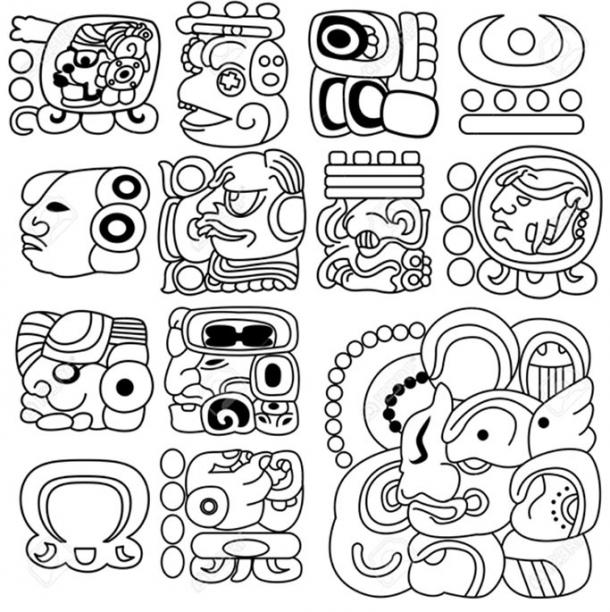
Although the Aztecs had several creation myths, perhaps the most widely known is the story of the five suns, including the Earth-Sun, the Wind Sun, the Rain Sun, the Water Sun, and the Earthquake Sun. There are some similarities between Aztecs’ creation myth of the five suns and ancient Greeks myths that describe how each human race created by the gods was less advanced than the previous one. In our article about gods’ creation of five different human races, we talked about how previous ancient races were doomed to be destroyed. Like many other ancient civilizations, the Aztecs saw time as a cyclical process. They were convinced that the world we live in, will eventually be destroyed, just like the previous worlds met their fate on this planet.
Age Of The Fifth Sun
The Earthquake Sun was related to the world in which the Aztecs lived, and we live today. These people considered themselves “the people of the sun’ living in the time of the Earthquake Sun (the Fifth Sun), which means the fifth era of a cycle of creation and destruction.

According to the Aztec worldview, the other suns (or creation attempts) all failed, so it was logical to assume this world would also end due to massive earthquakes. To nourish the sun by continuous rituals of human sacrifices was apparently the only way to delay the end of the fifth sun.
Four Directions And The Axis Mundi
Mesoamerican cosmology was viewed as the universe composed of five parts – four cardinal directions (east, west, south, and north) and the center. Additionally, they believed that the five suns were also the five births of the world, and they were the key to the rebirths of the world. The directions were essential to the Aztecs, since Teotihuacan, their great empire, was believed to be located in the center of the universe – Axis Mundi.

The Mixtec people of Oaxaca referred to books as the ‘tutu’, which also meant – ‘paper’ and in the 16th century, they called their codices ‘tonindeye’, (‘the history of families’), or ‘naandeye’ or (‘memories of the past’). Their codices were made from strips of paper, bark, cloth, or deerskin, about 13 feet long and about 6 inches high and folded like a harmonica, in the so-called accordion-style pleats, so that when opened, the reader saw two pages at a time. The two outer pages were glued to pieces of wood that served as covers. Depending on the used material the pages were made, they had their specific names: ‘holy paper’, ‘holy skin’, or others. It is possible that the adjective for sanctity was added due to the fact that the books largely related to mythology. Only a few of the pre-Columbian Mixtec books have been preserved to this day and all four are devoted to historical events. These codices are the Codex Zouche-Nuttall, the Codex Selden, the Codex Colombino-Becker, the Codex Waecker-Gotter, the Codex Bodley, and the Codex Vindobonensis (or Vienna, as it is sometimes called).

Chocolate: the Blood of the Gods?
‘Mythology taught that “Quetzalcóatl came to earth on the beam of a morning star bearing cacao trees from paradise and gave it to the people”. They learnt how to roast and grind cacao seeds and made a nourishing thick paste which can be dissolved in water. They added spices and called this drink xoco-atl (bitter water in Náhuatl) and believed that it afforded nourishment and good judgement.’ ‘Cacao was very precious to the Aztecs and as a drink it was restricted to the nobles and for use in religious ceremonies. Much as bread and wine are used by Christians as the body and blood of Christ, the flesh of the pod and the drink made from it represented the body and blood of the gods. Using a little imagination, when cocoa is crushed it often resembles blood…’ Even pouring the chocolate was a fine art! This lovely image comes from the Codex Tudela (original in Madrid) – a post-Colonial manuscript. We now know that it was this process of pouring the chocolate back and forth between jars – rather than the use of the molinillo wooden whisk, which probably came later with the Spanish – that gave the drink its rich, frothy quality. Whilst there is evidence that the Mesoamericans used tortoise- or turtle-shell stirrers, the whisk or ‘frizzle stick’ is notable by its absence in primary historical sources.

It was during the reign of emperor Ahuítzotl (1486-1502) that Aztec consumption of chocolate really began to take off: among his conquests was the province of Xoconochco (Soconusco) on the Pacific coast and a prime source of best quality cacao. There’s no doubt that the flow of tributary chocolate to the Mexica capital of Tenochtitlan was of epic proportions: by the time Ahuítzotl’s successor Motecuhzoma Xocoyotzin became emperor, his cacao warehouse – according to one Spanish chronicler – held some 40,000 ‘loads’, equating to several million beans! The Emperor himself of course drank only a tiny fraction of this stock: far more went to his guards, to the lords and nobility, as salaries and payments, to supply the Aztec warrior army, and for the consumption of long-distance merchants (who in a very real way were considered warriors).

Apoala: Where Mixtec myth meets nature’s haven

I dream that I can see myself walking among a ghost forest of thousand-year-old oak trees, with hanging strands of moss swaying slightly in the soft, chilly wind, floating spectres of the past that watch me pass by. I follow the narrow path upstream. It leads to a beautiful enchanted emerald waterfall, the cool mist enveloping my face and arms as the water crashes down. Walking again, the river’s course leads me upstream, along canals that surround parcels of tall crops made of pure gold, dancing in the wind, dancing to the beat of the water that surrounds them, clear as crystal. I reach the far end, up where the river parts the land and twin stone titans rise above to keep watch of its most precious treasure. I descend deep inside a cave where I encounter this treasure: a water source, a spring, which gives life to all that rests in this iridescent Garden of Eden. It is just like the spring mentioned in the local legends, giving life to the two trees that, in turn, created a civilisation. Apoala, where the Mixtec Gods created the Mixtec man.

The village of Santiago Apoala lays at the bottom of a steep system of canyons in the middle of the mountains of the Mixteca Region in northern Oaxaca. Although it does not seem far, it is nearly a three-hour drive by car or van from Oaxaca Centro. After driving into the town of Nochixtlán, we took the journey north along narrow dirt roads across ghostly oak forests and dry, barren landscapes that make you wonder how local farmers manage to grow anything. After passing through a couple of villages, the road led us to the edge of a canyon. I looked out into the abyss and felt a deep hole in my stomach – not from the vertigo caused by looking down – but because at the very bottom I could see what I had seen in my dream: it was the small patch of green surrounded by the stone titans. It was as if the garden knew I was coming. From here the only way to reach the village was by descending a zig-zagging trail that circles the edge of the mountain basin, leading directly to Apoala’s entrance. First, contact was made at the community tourism offices where we were greeted by the ecotourism committee. We paid our entry fees and were shown to our lodging in the wood cabins at the far end of the town. We decided to freshen up at the cabins before coming back to the tour office for lunch, and later we would take a stroll downstream to the main waterfall, Cola de Serpiente (Snake’s Tail).
Codex Borgia: Pre-Columbian Mexican Manuscript Of Great Importance

The Codex Borgia (or Codex Yoalli Ehēcatl) has a somewhat obscure past. There is a special group of mostly pre-Columbian manuscripts that originate from central Mexico. These documents have either religious or historical significance. However, the pre-Columbian codices of the Mixtec people of the state of Oaxaca in the southern part of the Republic of Mexico, are known as having geographical and historical content. The place of origin and the linguistic identity of the creators of the codices have been the subject of considerable debate. The documents were first identified by Eduard Seler (1849- 1922), a prominent German anthropologist, ethno-historian, linguist, epigrapher, academic and Americanist scholar, who focused on the study of pre-Columbian era cultures in the Americas.

The four main Aztec gods are considered to be Huitzilopochtli, Quetzalcoatl, Tezcatlipoca, and Xipe Totec. These gods were the children of Ometecuhtli. Though the Olmecs (1250–200 bc) were the first civilization in Mexico, the Aztecs (1325–1521) – Mesoamerica’s last imperial civilization and the most significant of the militaristic post-Classic period – are probably who first come to mind when we think of great empires of that region. Like other Mesoamerican cultures, Aztec gods and myths reflected a natural philosophy where ideas concerning life and death were linked symbolically to the earth, sky and sea in a grand cosmic scheme. Their religion was dominated by the tribal war god Huitzilopochtli, the rain/fertility god Tlaloc and the supreme deity Tezcatlipoca, the Lord of the Smoking Mirror.
Important Aztec Gods and Goddesses

The Aztecs, the Late Postclassic civilization that the Spanish conquistadors met in Mexico in the 16h century, believed in a complex and diversified pantheon of gods and goddesses. Scholars studying the Aztec (or Mexica) religion have identified no fewer than 200 gods and goddesses, divided into three groups. Each group supervises one aspect of the universe: the heaven or the sky; the rain, fertility and agriculture; and, finally, war and sacrifice. Often, the origins of the Aztec gods can be traced back to those from earlier Mesoamerican religions or shared by other societies of the day. Such deities are known as pan-Mesoamerican gods and goddesses. The following are the most important of the 200 deities of the Aztec religion.
Top 10 Deities of Mexica Mythology

Huitzilopochtli, Father of the Aztecs
Huitzilopochtli (pronounced Weetz-ee-loh-POSHT-lee) was the patron god of the Aztecs. During the great migration from their legendary home of Aztalan, Huitzilopochtli told the Aztecs where they should establish their capital city of Tenochtitlan and urged them on their way. His name means “Hummingbird of the Left” and he was the patron of war and sacrifice. His shrine, on top of the pyramid of the Templo Mayor in Tenochtitlan, was decorated with skulls and painted red to represent blood.
:max_bytes(150000):strip_icc():format(webp)/Huitzilopochtli-58b092905f9b586046d41fa2.jpg)
Tlaloc, God of Rain and Storms
Tlaloc (pronounced Tláh-lock), the rain god, is one of the most ancient deities in all Mesoamerica. Associated with fertility and agriculture, his origins can be traced back to Teotihuacan, the Olmec and the Maya civilizations. Tlaloc’s main shrine was the second shrine after Huitzilopochtli’s, located on top of the Templo Mayor, the Great Temple of Tenochtitlan. His shrine was decorated with blue bands representing rain and water. The Aztec believed that the cries and tears of newborn children were sacred to the god, and, therefore, many ceremonies for Tlaloc involved the sacrifice of children.
:max_bytes(150000):strip_icc():format(webp)/Tlaloc-58b093623df78cdcd8c75a7d.jpg)
Tonatiuh, God of the Sun
Tonatiuh (pronounced Toh-nah-tee-uh) was the Aztec sun god. He was a nourishing god who provided warmth and fertility to the people. In order to do so, he needed sacrificial blood. Tonatiuh was also the patron of warriors. In Aztec mythology, Tonatiuh governed the era under which the Aztec believed to live, the era of the Fifth Sun; and it is Tonatiuh’s face in the center of the Aztec sun stone.
:max_bytes(150000):strip_icc():format(webp)/Tonatiuh--58b094895f9b586046d92624.jpg)
Tezcatlipoca, God of Night
Tezcatlipoca (pronounced Tez-cah-tlee-poh-ka)’s name means “Smoking Mirror” and he is often represented as an evil power, associated with death and cold. Tezcatlipoca was the patron of the night, of the north, and in many aspects represented the opposite of his brother, Quetzalcoatl. His image has black stripes on his face and he carries an obsidian mirror.
:max_bytes(150000):strip_icc():format(webp)/Teotihuacan_-_Chalchiuhtlicue-21856052326246dca8fbc55f81dbcbeb.jpg)
Chalchiuhtlicue. Goddess of Running Water
Chalchiuhtlicue (pronounced Tchal-chee-uh-tlee-ku-eh) was the goddess of running water and all aquatic elements. Her name means “she of the Jade Skirt”. She was the wife and/or sister of Tlaloc and was also the patroness of childbirth. She is most often illustrated wearing a green/blue skirt from which flows a stream of water.
:max_bytes(150000):strip_icc():format(webp)/Black_Tezcatlipoca-f07f2c8a50a44ba48efd45e02a8d4af7.jpg)
Quetzalcoatl, The Feathered Serpent
Quetzalcoatl (pronounced Keh-tzal-coh-atl), “the Feathered Serpent”, is probably the most famous Aztec deity and is known in many other Mesoamerican cultures such as Teotihuacan and the Maya. He represented the positive counterpart of Tezcatlipoca. He was the patron of knowledge and learning and also a creative god. Quetzalcoatl is also linked to the idea that the last Aztec emperor, Moctezuma, believed that the arrival of the Spanish conquistador Cortes was the fulfilling of a prophecy about the return of the god. However, many scholars now consider this myth as a creation of the Franciscan friars during the post-Conquest period.
:max_bytes(150000):strip_icc():format(webp)/Quetzalcoatl_magliabechiano-a5e3f3ad4a654235b0ba28375ef96ca4.jpg)
Xipe Totec, God of Fertility and Sacrifice
Xipe Totec (pronounced Shee-peh Toh-tek) is “Our Lord with the flayed skin.” Xipe Totec was the god of agricultural fertility, the east and the goldsmiths. He is usually portrayed wearing a flayed human skin representing the death of the old and the growth of the new vegetation.
:max_bytes(150000):strip_icc():format(webp)/Xipe-totec-577b9cb43df78cb62cfd8a2b.png)
Mayahuel, Goddess of Maguey
Mayahuel (pronounced My-ya-whale) is the Aztec goddess of the maguey plant, the sweet sap of which (aguamiel) was considered her blood. Mayahuel is also known as “the woman of the 400 breasts” to feed her children, the Centzon Totochtin or “400 rabbits”.
:max_bytes(150000):strip_icc():format(webp)/Mayahuel.svg-cc4982d48e39401194a31532d2ef82c3.png)
The Civatateo were Aztec vampires, the most vampiric of all the Aztec deities. They were hideous creatures with pale faces, arms and hands covered in white chalk (called ticitl) and crossbones painted upon their tattered dresses. But, believe it or not, they were once beautiful noblewoman. But these lovely women died in childbirth and therefore were doomed to return as a horrific Civatateo. They were said to be servants of the gods Tezcatlipoca and Tlazolteotl. Tezcatlipoca being the god of the moon, nocturnal sky, god of the ancestral memory, god of time and the Lord of the North. Tlazolteotl was the goddess of the moon, of ritual cleansing (she was known as “the Eater of Filth”), human fertility and of sexuality. As the god’s servants, the Civatateo had the magical powers of a priest. The Civatateo were also given the honorific title of civapipiltin (princess) for dying in childbirth.

Tlaltecuhtli, Earth Goddess
Tlaltechutli (Tlal-teh-koo-tlee) is the monstrous earth goddess. Her name means “The one who give and devours life” and she required many human sacrifices to sustain her. Tlaltechutli represents the surface of the earth, who angrily devours the sun every evening to give it back the next day.
:max_bytes(150000):strip_icc():format(webp)/Tlaltecuhtli-56a023b73df78cafdaa04910.jpg)
First of all, let it be known that the Aztecs were never called “Aztecs” in their time. They were known as the Mexica. The various ethnic groups of Central Mexico were generally known as the Nahua and their language is called Nahuat Meaning “Clear Speech”. The Mexica (Mēxihcah in Nahuatl) that dominated the valley of Central Mexico at the time of European contact only migrated there sometime in the mid 1200s, from an unknown northern area that they referred to as Aztlán. Much of their culture was adopted from the surrounding civilizations, or descended from older ones like the Toltecs

Cosmology
Aztec theology postulated an eternity which, however, was not without its epochs. It was thought to be broken up into a number of aeons, each of which depended upon the period of duration of a separate “sun.” No agreement is noticeable among authorities on Mexican mythology as to the number of these “suns,” but it would appear as probable that the favourite tradition stipulated for four “suns ” or epochs, each of which concluded with a national disaster-flood, famine, tempest, or fire. The present veon, they feared, might conclude upon the completion of every ” sheaf ” of fifty-two years, the ” sheaf ” being a merely arbitrary portion of an veon.
The period of time from the first creation to the current aeon was variously computed as 15,228, 2386, or 1404 solar years, the discrepancy and doubt arising because of the equivocal nature of the numeral signs expressing the period in the pinturas or native paintings. As regards the sequence of “suns” there is no more agreement than there is regarding their number. The Codex Vaticanus states it to have been water, wind, fire, and famine. Humboldt gives it as hunger, fire, wind, and water; Boturini as water, famine, wind, and fire; and Gama as hunger, wind, fire, and water.
Xochiquetzal Goddess

The goddess Xochiquetzal was one of the most important deities in the Aztec pantheon. Her name, pronounced show-chee-ket-zal, is a combination of the Nahuatl worlds for ‘flower’ and ‘quetzal bird.’ The quetzal bird has beautiful feathers, so both roots of her name indicate grace and beauty. Perhaps unsurprisingly, she was the Aztec fertility goddess, also serving as the goddess of erotic love, and household arts. Though she was very important within Aztec mythology, her origin story is unclear, and may have been lost in the wake of the Spanish conquest. It does seem that Tamoanchan, a lush paradise somewhere to the west, was her birthplace. Interestingly, Tamoanchan is a Mayan word, indicating that the Aztecs did not invent Xochiquetzal. As the goddess of such important things as pregnancy and weaving, it’s not surprising that she had an ancient origin.


Comments
Post a Comment