Mythologies of the Maldives

Folklore
Maldivians inherited a treasure trunk of ancient mythology and folklore that was passed orally through generations. These myths cover fascinating stories on various aspects of island life. Since the islands are surrounded by sea, most folktales depict fearful sea demons and spirits that haunt the islanders.

Music & Dance
The Maldives boasts of a rich culture of music and dance. Some of the cultural music and dances can trace their roots to distant continents. Resort islands organize cultural performances to entertain their guests regularly during which you can observe islanders performing traditional music and dance items. One of the most famous Maldivian cultural displays which involve singing and dancing is called the “Bodu Beru”. The Bodu Beru performers, numbering around 20 will be wearing traditional garb of sarongs and white sleeved shirts. Bodu Beru performance is guaranteed to make you sway along with the drumbeats. Other traditional music and dance items include; Dhandi Jehun, Langiri, Thaara and Gaa Odi Lava. Most of these items involve rhythmic music and dances using various cultural props. There are some cultural routines exclusively performed by Maldivian women. Bandiyaa jehun, Maafathi Neshun and Bolimalaafath Neshun. Some of these acts were designed to perform in the royal courts. Indian and Western music have also greatly influenced the musicians of the country. Frequently resorts host performances of local bands to enliven their guests.
Maldivian mythology or Maldivian folklore is the body of myths, tales and anecdotes belonging to the oral tradition of Maldivians. Even though some of the Maldivian myths were already mentioned briefly by British commissioner in Ceylon HCP Bell towards the end of the 19th century, their study and publication were carried out only quite recently by Spanish writer and artist Xavier Romero-Frias, at a time when that ancestral worldview was quickly disappearing. The Maldives lie in the warm equatorial area of the Indian Ocean surrounded by very deep waters. This nation is made up exclusively of coral atolls. There are about 1,200 small flat and sandy islands, but only about 200 of them are inhabited. The Maldives have been continuously populated for millennia; therefore the folklore of these islands is very ancient.
Myths of origin
The main myths of origin are reflecting the dependence of the Maldivians on the coconut tree and the tuna fish. A legend says that the first inhabitants of the Maldives died in great numbers, but a great sorcerer or fanḍita man made coconut trees grow out of the skulls of the buried corpses of the first settlers. Therefore, the coconut tree is said to have an anthropomorphic origin according to Maldive lore. The coconut tree occupies a central place in the present-day Maldive national emblem. The tuna fish is said to have been brought to the Maldivian waters by a mythical seafarer (maalimi) called Bodu Niyami Kalēfanu who went close to the Dagas (the mythical tree at the end of the world) to bring this valuable fish.
Myths of extinction
These myths tell that the end of the Maldives will be a great catastrophe where the islands will be submerged by the surrounding ocean. Similar myths are found in the Andaman Islands as well as in the Nicobar Islands.
Origin of Malé
Early settlers in the Maldives were probably Gujaratis, who reached and settled Sri Lanka about 500 B.C. Evidence of cultural influence from North India can be deduced from the methods of boat building and silver punch-marked coins It is said that Giraavaru fishermen used to go regularly to a certain large sandbank (finolhu) at the southern end of their atoll to clean tuna fish after a good catch. Owing to the large amount of tuna fish offal and blood, the waters around that sandbank looked like a big pool of blood (maa ley gandeh). “Maa” (from the Sanskrit “Maha”), meaning big, and “Lē” meaning blood. Traditionally the first inhabitants of the Maldives, which include the Giraavaru people, didn’t have kings. They lived in a simple society and were ruled by local headmen. One day a prince from the Subcontinent called Koimala arrived to Malé Atoll sailing from the north on a big ship. The people of Giraavaru spotted his vessel from afar and welcomed him. They allowed Prince Koimala to settle on that large sandbank in the midst of the waters tainted with fishblood. Trees were planted on the sandbank and it is said that the first tree that grew on it was the papaya tree. As time went by the local islanders accepted the rule of this Northern Prince. A palace was built and the island was formally named Maa-le Malé, while the nearest island was named Hulhu-le (Hulhulé).
Evil spirits

Most of the popular tales in Maldives are about evil spirits and their interaction with the islanders. These stories contain always a lesson in some form or the other. Certain actions became necessary in order to avoid trouble with the spirit world. These patterns of behaviour, like the importance of keeping a secret, as well as the avoidance of certain areas of the island and of inauspicious times, were an essential component of the ancient popular spirituality. The Maldivian spirits can take human form, even if it is not known whether they have a human origin or not. While in human shape, the malevolence of those spirits is often masked by beauty and youth. Certain Maldivian evil spirits (handi) have the appearance of charming, beautiful women. These stories about female spirits have their origin in the Ancient Dravidian Village Goddess worship and they point to the ethnic origin of the Maldive people. Other evil spirits which are the subject of many folk stories in the Maldives (furēta) are crude monsters coming from the ocean waters. The tales about sea monsters are part of the local cultural background, which is characterized by the oceanic environment in which, along the millennia, the Maldivian culture developed.

Folktales where fishes, crabs and seabirds are the heroes, like the tales about Mākana, Findana, Kalhubondage Diye, Fandiyaaru Kakuni, or Don Mohonaai Miyaru, introduce us to the world of the local fauna of the Maldive Atolls, where land animals are very few. Many of these are tales for children and some are still quite popular. Although most of the stories of this type are original, a few are foreign tales or fables which have been adapted to the island context through local storytellers or by Maldivian learned men, like the late Muhammad Jamil.
Mighty sorcerers
In the ancestral oral literature of Maldivians, the sorcerer, or learned man of the island who knew the magic arts. Magic or sorcery is known in Maldives as fanḍita. The Maldivian sorcerer or fanḍita veriyaa is always portrayed in the folklore of Maldivians as a hero. Only he knew how to appease the spirits that terrified the average island folk on a daily (or better nightly) basis. Some recent stories tend to cast the sorcerer in the role of a villain, but these are totally disconnected from the ancestral Maldive lore.
Coconuts Tales

The coconut tree is also the national tree of the country for the same reason. Coconuts are an important part of the Maldivian culture, some even consider coconuts to be sacred. The coconut tree is also the national tree of the country for the same reason. According to the tale, the first coconut trees that grew on the Maldives was because of a sorcerer or fandita who used the skulls of the first settlers buried there to grow the trees. The story seems like it is straight out of a horror movie, but it is what the people of Maldives believe.
Conversion To Islam
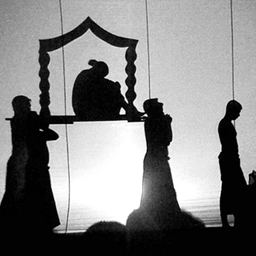
According to the mythical stories, the islands of Maldives were haunted by the demon Rannamaari. The Maldives used to be a Buddhist country but ever since the 12th century, the entire country converted to Islam. According to the mythical stories, the islands of Maldives were haunted by the demon Rannamaari. Every now and then the sea monster would hurt the people of Maldives and the only way to keep the creature at bay was to pay a certain sacrifice. It is said that when Abul Barakat a Moroccan scholar came to the Maldives and recited the Holy Quran, the demon Rannamaari dived into the Arabian Sea and never returned.
Maldives’ End

There is no way to predict if and when the island will sink. According to Maldivian folklore, everything good in life will come to an end and so will Maldives. According to this belief, the entire islands of the Maldives will soon disappear and be swallowed by the sea. However, there is no evidence that proves that the Maldives will be sinking any time, on the other hand, there is also no way to predict if and when the island will sink. Therefore, the best thing that you can do is to really enjoy this scenic archipelago while you still can.
Tuna
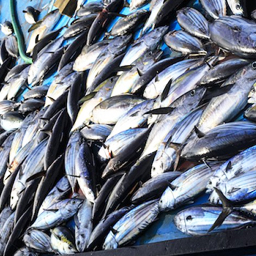
Tuna
Tuna is an important part of the Maldivian diet and is available almost everywhere. As far as the local beliefs are concerned, Tuna came to the Maldives as a result of an encounter. It was between a seafarer Bodu with Dagas which was a mythical tree. When Bodu defeated Dagas, all of the Tuna moved towards the Maldivian shore. Which led the Maldives one of the home for tuna.
Conversion of the Maldives to Islam
It’s true that in 1153 AD the Maldives population became a Muslim nation when Yusuf Al Barbari, a Sunni Muslim from Morocco, came to spread the message of Islam. But the folk tale around the circumstances is very different from the history books. It is said that every month since time began a young girl had to be sacrificed to a sea demon that menaced the Maldivian people. When Yusuf Al Barbari arrived he suggested he go in the girls place and recite versus from the Quran. The demon disappeared and never came back, leading the Maldivian people to believe that it was Islam that saved them.
First Coconuts
When the first people arrived in the Maldives, there were no palm trees and so no coconuts. The population struggled to survive without the tree as it would usually provide food, drink, shelter, wood for boat building and firewood among many other things. The people started to die without these things. A man who lived with the people was a great sorcerer and was determined to do something to help. He created a mixture that he took to the graveyard and places in the skulls of the people who had passed away. Out of the mouth of every skull grew a palm tree bearing coconuts, saving the population. When the husk is removed from a coconut you can see three holes which look like a face. Palm tress are so important to Maldivian people that one features on the national emblem.
Trip on the Boat
One day a group of girls went to the harbour and found a master fisherman. They asked him if they would take them to see the Andaman Islands as they wanted to see a foreign country. He agreed and the girls were thrilled. He went to start the engine and it wouldn’t start, everything else started to go wrong, the engine made strange noises and failed repeatedly, there were problems with the crew and even a fire on board. The girls kept pointing out the problems and teasing, ‘how will we get anywhere like this.’ The fisherman put up with the teasing but the journey never began. This story dates from when motors had first started to be fitted to local boats which had been powered by sails and oars until then. The motors were initially trusted very little which became the basis for a folk song, then this tale.
Man on the Whale
It is said that there is a man who lives on a whale who has lived there for many years. He sits on the back of the whale, holding on to the fin and the whale knows to never go completely underwater for long as it knows the man would die. Sometimes it will immerse itself if it knows there is danger nearby but not for long. The man eats raw fish and knows how to catch fish with his hands and the whale can help him find them. From the waist down the mans body is like the hull of a ship, covered in barnacles and seaweed. Many fisherman around the Maldives claim to have seen this man on the whale but that the whale and him swim away quickly if they’ve been spotted.
There are a few Myths from the Maldives. The two main myths reflect the reliance of the Maldivians on both the coconut tree and tuna fish. A legend says that the first inhabitants of the Maldives died in large numbers, but that a great wizard made coconut trees grow out of the skulls of the buried bodies of those first settlers. The coconut tree is said to have an anthropomorphic beginning. The coconut tree has a focal place in todays Maldivian culture and is their national emblem. The tuna fish is said to have been brought to the Maldives by a mythical seafarer called Bodu Niyami Kalēfanu who travelled very close to the Dagas (the mythical tree at the end of the world) to find this great fish and bring it back to the Maldives. Another Myth is about a sea monster, the Rannamaari, who came from the depths of the sea and had to be placated by a virgin sacrifice each month. Then, Abul Barakat, a Berber scholar from Morocco came to the Maldives in the early part of the 12th century and heard about the sea monster from a grieving family. Next time a young girl was due to be sacrificed he volunteered to step in. He stood watch through the night, reciting from the Qur’an at the idol house where the virgins sacrificed. That night, the sea monster came up from the deep, drew closer, only to immediately dive under the waves when he heard the holy recitation, that kept on until dawn. That morning the Maldivians celebrated, and when the King heard of this he was very pleased and promptly converted to Islam and was readily followed by the complete population of the country, who discarded their Buddhist idols and became enlightened overnight.
5 MYTHS OF MALDIVES THAT YOU SHOULD KNOW ABOUT

SYMBOLISM OF COCONUTS
The coconut tree is deemed sacred by Maldivians, which is also why it stands as the country’s national tree. This ideology finds its roots in realm of magic. It was said that coconut trees came to sprout on Maldives because a fandita, or sorcerer, had transmuted their growth from the skulls of the first settlers buried there. Quite the creepy start, we would have to admit, but one that’s nonetheless iconic. Transport yourself back in history every time you sip in coconut water by the beach, sit under a coconut tree or buy a memorabilia engraved with the coconut-themed Maldivian emblem.
SIGNIFICANCE OF TUNA FISH
Coconuts are not the only symbolic offering in Maldives; you can also honour the country’s origins by indulging in tuna fish. Being the dietary staple of Maldivians nationwide, the fish can be found anywhere and everywhere on the islands. According to local beliefs, the abundance of tuna was due to a close encounter that a mythical seafarer named Bodu Niyami Kalēfanu had with the Dagas, a mythical tree at the end of the world. As a result of this event, the fish was brought from where the tree was to Maldivian shore, and thus began its residential breeding and national food status.
TALE OF MALDIVES’S FIRST KIN
The story of King Koimala is a soft serve reminding visitors to appreciate Maldives’s sparkling wonders and developments. The first to rule the entire archipelago, the king was revered for bringing kingdomship to the lush territories, officiating the nature-fused Buddhist beliefs of whatever little inhabitants there were before him as he went. Word has it that King Koimala himself came from humble origins; his early days was spent as a wandering orphan in a small forest in Sri Lanka, herds of cattles always by his side. It was only after being found and adopted by the Sri Lankan ruler King Serendip would he then learn the ropes of sovereignty, which he later applied after discovering Malé Atoll, a beautiful atoll north of Maldives. So if you ever wonder why Maldivians are superbly tuned to their environment, you need only look at their country’s history to find out.
HISTORY OF ISLAMIC PRACTICES
Maldivians today practice Sunni Islam, having left their Buddhist days behind since the 12th century. Their belief system, sustained in the officiation of Islam as the country’s national religion, finds its origin in the lore of Rannamaari. According to mythologists, Rannamaari was a sea monster who lived in Maldivian waters. He could only be kept away via the sacrifice of a virgin from time to time. This macabre routine was said to cease only when Abul Barakat, a Moroccan scholar, arrived in Maldives. Upon hearing Barakat’s recitations of the Quran, Rannamaari then dived back into the Arabian Sea, never to return again. As a result of the scholar’s victory against the creature, the entire Maldivian nation decided to embrace Islam, and has never looked back since.
FORECAST OF MALDIVES’S END
Everything good in life will to an end, and according to Maldivian folklore, so will Maldives. It is said that somewhere in the future, the entire island will catastrophically sink beneath the sea, catastrophically meeting the same fate allegedly assigned to Italy’s Venice as well as the Andaman and Nicobar islands. Nothing showcases the belief in this Atlantis-like myth more than the crop of modern architecture on Maldives today. Urban adaptation works are increasingly taking place as a way to cruise through a present problem of rising sea levels. Since no one can really predict when Maldives will actually submerge in water, the only way to brace through this existential crisis is by appreciating the archipelago while she is still around!
10 Popular Maldivian Myths and Legends
Maldives is renowned as a misty, magical country steeped in myth, mystery and legend, with a storied history of ancient kingdoms, terrifying ghosts and national icons. It often evoke as though every island in the archipelago is associated with a haunting, or tale of woe!
Handi Gandwaru Dhonkamana

Maldivian legend has it that many centuries ago, “Handi Gandivaru Dhonkamana” (rough translation ‘Fair Lady of the Ghost Palace’) a subspecies of homosapien – possessing superhuman abilities such as shape-shifting and mimicking the appearance and voice of any person with exquisite precision. Her human form is a beautiful young woman, of melancholy look, hair and eyes black and bright as jet and velvety skin. The story says, “Everyday Handi Gandivaru Dhonkamana sneaks into her household gifili, a private courtyard that serves as an open-air bathroom, where she bends down into the well and and comes out with a fresh tuna for family consumption.
Santhi Mariyambu

The folklore goes on that Santhi Mariyambu awakes only on full-moon nights. She comes with a gunny-sack full of teeth on her back, searching for children asleep in open spaces, particularly children that bite their fingernails and do not wash their mouth. If she comes across one, she pulls out all their dirty teeth and fix a new set, on condition that the child remains quiet.
Kandumathi Elhun

Paranormal events in Maldivian waters dates back at least three decades. Kandumathi Elhun incidents occur in various forms – from fishing boats and passenger ferries going off course or lost for an unprecedented amount of time at sea, to a ball of fire appearing out of nowhere, sudden appearance of floating corpse or coffins, boat travelling for hours but actually staying in the same place although compass shows otherwise, or even the sudden appearance of uncharted islands.
Dhon Hiyala and Ali Fulhu

Love is the most powerful emotion in the universe and Maldivian history is full of folklores where gallant kings and ordinary men fought battles against all odds to conquer their love. This is the story of Dhon Hiyala and Ali Fulhu, one of the most celebrated Maldivian sagas, a ruggedly handsome man who takes a heroic journey to find Dhon Hiyala, the love of his life, a young beautiful woman who was described as the epitome of beauty at the time. Their love takes a dark course when the King falls for Dhon Hiyala. Masterstroke! Legend also has it that, Dhon Hiyala and Ali Fulhu are buried on the island of Kandoodhoo in Thaa atoll, with some debating on it’s origin, while others have concluded it as folklore.
Safaru Kaiydha

Safaru Kaiydha is said to come on land on the tenth night of Safar, the second month of the lunar-based Islamic calendar. She leads a trail with dozens of children behind her and is fully capable of doing whatever she needs to in order to get what she wants. If she comes for the good, she brings wealth and prosperity for the islanders, and if she comes for the worst, she will bewitch the island bringing despair and destruction (no fruits will ripen on the island). Island residents usually prepare for the night she arrives – they would hide their grinding stones and cover the water wells from dusk until dawn, to prevent Safaru Kaiydha bathing all her children from their wells and from preparing spices on the grinding stones for her family.
Baburu Kudhin

Many local historians admit to have seen Babukuru Kudhin, which translates as “Negro Boys”. They are only seen during the night – hovering or floating above the ground.
Hulhule

The name Hulhule is derived from the island of Hulhule where the country’s main airport is located and Bodumeeha means “Big Man” in local language. Early historians claim to have spotted it several times and is said to stand at a jaw-dropping height of 50-feet tall.
Rannamaari

A myth from the chronicles when Maldives converted from Buddhism to Islam. Rannamaari was a sea monster that once haunted the people of the Maldives. Once a month, a young, female, virgin wearing a revealing outfit or sometimes nothing at all had to be sacrificed for the demon, or the people were to face his wrath. A girl was chosen from the inhabitants by the king or his advisers and she would be chained to a rock, wall, or hard surface at the eastern seafront of Malé with the intention that she would be eaten by Rannamaari. The reasons vary, but the usual explanation is that she is being sacrificed to appease the demon. At dawn, the girl’s family would return to the temple to find the remains of the girl.
Avattehi

They are shape-shifters appearing in the form of women with long hair flowing freely down their backs. They are helpful and work obediently for island residents as maids attending their daily household chores, only during the night. If cooking of fish is required for the evening, they will do the needful only after everyone in the premises falls asleep and will take away the remains of the fish considering it their meal. They do not interact or communicate with humans and should only be spoken in opposite terms; i.e., if something is needed to be cleaned, it must be told not to clean it. They are also capable of transforming their physical form or shape quick and appear both as man or woman.
Foolhu Dhigu Handi

“Foolhu Dhigu Handi,” translates as the “Umbilical Cord Monster” and is said to have inhabited within the compounds of a mosque on a local island. As the name implies, it has a very long umbilical cord and a massive teeth. Island residents see it at the mosque’s graveyard filling human skulls with sand scoops and bathing by pouring it on its head. It is capable of penetrating its long umbilical cord through fences and walls and when this happens, the people in the houses will fall unconscious. If it is seen by anyone, it will possess that person, and the troubles caused when possessed include, severe stomach ache, stiff neck and it may even suck blood from a person. He is not your average peeping Tom!


Comments
Post a Comment