MYTHOLOGIES OF PERU

http://indigenouspeople.net/Peru/
https://en.wikipedia.org/wiki/Indigenous_peoples_in_Peru
Wari culture sculpture, c. 600–1000 CE, wood with shell-and-stone inlay and silver, Kimbell Art Museum
Indigenous peoples in Peru, or Native Peruvians, comprise a large number of distinct ethnic groups who have inhabited the country of Peru‘s territory since before its discovery by Europeans around 1500. Indigenous cultures developed here for thousands of years. The first Spanish explorers called the indigenous peoples of the Americas indios, or “Indians,” as they had been hoping to find the East Indies of Asia. The term is still used today, although it is sometimes thought to have a derogatory connotation.

Dancers at Quyllurit’i, an indigenous festival in Peru
In 2017, the 5,972,606 Indigenous peoples formed about 26% of the total population of Peru.
At the time of the Spanish invasion, the indigenous peoples of the rain forest of the Amazon basin to the east of the Andes were mostly semi-nomadic tribes; they subsisted on hunting, fishing, gathering, and migrant agriculture. Those peoples living in the Andes and to the west were dominated by the Inca Empire, who had a complex, hierarchical civilization. It developed many cities, building major temples and monuments with techniques of highly skilled stonemasonry.
INDIGENOUS MOUNTAIN PEOPLE OF PERU
Many of the estimated 2000 nations and tribes present in 1500 died out as a consequence of the Spanish colonization of the Americas, largely because of exposure to new Eurasian infectious diseases endemic among the colonists, to which they had no acquired immunity.
Many survivors had unions with Spanish and their descendants were gradually assimilated into the general mestizo (“mixed race”) Peruvian population. All of the Peruvian indigenous groups, such as the Urarina, and even those who live isolated in the most remote areas of the Amazon rainforest, such as the Matsés, Matis, and Korubo, have changed their ways of life to some extent under the influence of European-Peruvian culture. They have adopted the use of firearms and other manufactured items, and trade goods at a remove from mainstream Peruvian society. These indigenous groups maintain cultural identities and practices that keep them distinct from majority Hispano-Peruvian society.

Quechua people in Conchucos District, Peru
According to the National Institute of Statistics and Informatics, out of a 31,237,385 population, the Indigenous people in Peru represent about 25.7%. Of those, 95.8% are Andean and 3.3% from the Amazon. Other sources indicate that the Indigenous people comprise 31% of the total population.
| Population by region, 2017 | ||
|---|---|---|
| Region | Percent | |
 | Apurímac | 84.1% |
 | Ayacucho | 81.2% |
 | Huancavelica | 80.8% |
 | Cusco | 74.7% |
 | Puno | 57.0% |
 | Huánuco | 42.9% |
 | Pasco | 37.7% |
 | Junín | 34.9% |
 | Madre de Dios | 34.5% |
 | Ancash | 34.0% |
| Arequipa | 31.1% | |
 | Lima | 17.5% |
| Lima Province | 16.3% | |
 | Moquegua | 14.6% |
 | Ica | 14.3% |
 | Callao | 10.2% |
 | Tacna | 7.3% |
 | Cajamarca | 6.2% |
 | San Martín | 5.1% |
 | Ucayali | 5.0% |
 | Lambayeque | 4.2% |
 | La Libertad | 2.9% |
 | Amazonas | 2.9% |
 | Piura | 2.2% |
 | Tumbes | 1.9% |
 | Loreto | 1.4% |
In the Amazonian region, there more than 65 ethnic groups classified into 16 language families. After Brazil in South America and New Guinea in the Pacific Ocean, Peru is believed to have the highest number of uncontacted tribes in the world.
RIGHTS AT RISK: THE FIGHT FOR TRUE COMMUNITY CONSULTATION CONTINUES IN PERU

Is the newly elected Peruvian government turning its back on indigenous peoples’ land rights and putting profits before people? All the signs suggest they are. Last week, Peru’s new Minister for Culture publicly claimed that prior consultation—a right of indigenous peoples enshrined in Peru’s national law—was merely a mechanism to generate “trust” with indigenous peoples and create “stability” for private investment. Those who follow Oxfam’s work in Peru know that this is a far cry from what the country’s landmark rule, specifying that consultations should aim to secure indigenous peoples’ prior agreement or consent for projects like mining, oil, gas and forestry actually requires. Fundamentally, it is a matter of human rights, of dignity, and of justice.

PERU: CULTURE MINISTRY’S INVESTMENT TO FOCUS ON INDIGENOUS PEOPLES


Peru promotes use of indigenous names in public records
Indigenous Peruvians often have one name at home and another, usually Spanish, for official purposes. Now registrars are being urged to embrace native languages.

There are currently reported to be 92 separate and distinct languages spoken in Peru (Ethnologue: Languages of the World).
It’s interesting to note that although the common language of Peru is Spanish, legally all indigenous languages are recognized as official languages now by the Peruvian government.
The sheer numbers, at first glance, may be surprising. However, compared to Mexico, for example (291 distinct languages), this is not an unusually large number of indigenous tribes, considering the remoteness of many of Peru’s rain forest and cloud forest areas.

With around 33 million people, Peru is the fourth most populous nation in South America. Around 45 percent of the citizenry is indigenous, the second highest percentage in the western hemisphere, after Bolivia.
The most numerous indigenous population, however, is to be found in the Andes mountains, amongst the Quechua-speaking people who trace their origins to the Inca – and other peoples who lived in the Andes at the time of the Spanish Conquest.
Quechua is the native tongue of more than three million Peruvians, mostly in the central and northern Andes. The Quechua people are the largest indigenous group in South America today. Most Quechua communities are in the high Andes and are focused on farming. The Quechua are known worldwide for their beautifully intricate textile arts, and for their ability to thrive in high-altitude environments.

Peru is home to 51 indigenous communities, all of whom have a unique culture and way of life. Among the 31 million people who live in Peru, about 80% identify as either mestizo (a person of combined indigenous and European descent) or indigenous. From the high Andes to the jungles of the Peruvian Amazon, there are many thriving indigenous people of Peru to get to know.
The Aymara people also live in the Andes. They make their home in the Altiplano, which is a plateaued and windy region of the mountains. Like the Quechua, the Aymara have been around since long before the Inca empire. Today many Aymara people, as well as the Quechua, have spiritual practices that combine facets of traditional indigenous beliefs and Catholic beliefs brought over by the Spanish.
Many Aymara make their living as farmers and grow potatoes, quinoa, corn, and other crops. Many others work as herders of llama and alpaca. They mainly speak the Aymara language.

How Peru Excludes Indigenous Voices in Its Quest to Develop the Amazon
Most people living in Peru’s Amazon regions are indigenous, a group of people who remain excluded and discriminated against. According to one former president, indigenous people are an obstacle to development, “artificial communities that own 200,000 hectares on paper but only farm 10,000 hectares while the rest is idle property.”

THE UNCONTACTED INDIANS OF PERU
There are at least 20 uncontacted tribes living in the Peruvian Amazon, all face catastrophe unless their land is protected.
The greatest threats to Peru’s uncontacted Indians are oil workers and illegal loggers.
More than 70% of the Peruvian Amazon has been leased by the government to oil companies. Much of this includes regions inhabited by uncontacted tribes.
Oil exploration is particularly dangerous to the Indians because it opens up previously remote areas to other outsiders, such as loggers and colonists. They use the roads and paths made by the exploration teams to enter.
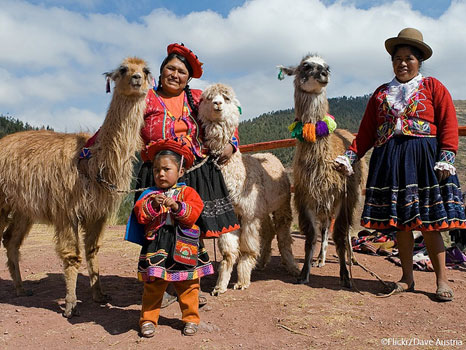

Elders in Peruvian Andes Help Interpret Climate Changes
“Before, things happened at the right time. Now, strange things are going on with the climate.” This is the kind of comment that is heard frequently in dozens of rural communities throughout the departments (provinces) of Puno, Cuzco and Apurímac in the country’s southern Andean highlands.

The Peruvian Government was denounced in court by the National Organization of Andean and Amazonian Indigenous Women of Peru (Onamiap) “for putting at risk the indigenous peoples during the pandemic” of the covid-19, which already leaves more than 292.000 cases and 10.000 deceased in the Andean country.
“We are demanding and demanding that indigenous peoples and women be considered as subjects of law, that they do not take us as second or third category people,” Onamiap president Melania Canales Poma told EFE, explaining the action of amparo filed before the Peruvian Judiciary.

Every year, since 1783 in the Sinakara Valley at the foot of Mt Ausagante, Peru, the Qoyllur Rit’i, or ‘Snow and Star’ festival draws tens of thousands of pilgrims from across the Peruvian Andes and beyond to what is the biggest religious gathering of its kind. The event merged into a mosaic of indigenous, pagan and catholic worship when the image of Jesus appeared on a boulder after the death of a young shepherd in 1780. After hundreds of years, the Qoyllur Rit’i is under threat, and its meaning is changing. The warmer climate in the region has melted much of the sacred Qolqepunku’s glaciers where the festival’s rituals take place. Where there once stood ice blocks believed to hold special healing properties now only reside rocky slopes, as ice sheets retreat up into the mountain. In a study by the Peruvian government, it found that it’s country’s glaciers had shrunk by more than 20 per cent over a 30 year period. It has been predicted by The National Commission on Climate Change that Peru could lose all its glaciers below 18,000 feet and that within 40 years, they may all be gone.

The Indigenous peoples of Peru, or Native Peruvians, comprise a large number of ethnic groups who inhabit territory in present-day Peru. Indigenous cultures developed here for thousands of years before the arrival of the Spanish in 1532.
In 2017, the 5,972,606 Indigenous peoples formed about 26% of the total population of Peru.[1] At the time of the Spanish arrival, the Indigenous peoples of the rain forest of the Amazon basin to the east of the Andes were mostly semi-nomadic tribes; they subsisted on hunting, fishing, gathering and slash and burn agriculture. Those peoples living in the Andes and to the west were dominated by the Inca Empire, who had a complex, hierarchical civilization. It developed many cities, building major temples and monuments with techniques of highly skilled stonemasonry.

Many of the estimated 2000 nations and tribes present in 1500 died out as a consequence of the expansion and consolidation of the Inca Empire and its successor after 1533, the Spanish empire. In the 21st century, the mixed-race mestizos are the largest component of the Peruvian population.
With the arrival of the Spanish, many Natives perished due to Eurasian infectious diseases among the foreigners, to which they had acquired no immunity.

Machu Picchu was built in the classical Inca style, with polished dry-stone walls. Its three primary structures are the Intihuatana, the Temple of the Sun, and the Room of the Three Windows. Most of the outlying buildings have been reconstructed in order to give visitors a better idea of how they originally appeared. By 1976, 30% of Machu Picchu had been restored and restoration continues.


Like most ancient peoples, the Incas and their contemporaries worshipped multiple gods. Yet there was an unmistakable tendency for each group to recognize a single god as supremely significant, at least so far as its own tribal fortunes were concerned. For the Incas at Cuzco this god was Inti, the sun. For the tribes of the northern coast it was Con, or Kon, also called Coniraya, the meaning of whose name is not now known. Another god of surpassing importance was Viracocha, whose cult may have originated on the shores of Lake Titicaca.

Oral storytelling has kept alive legends, myths and tales of any country, and Peru is no exception. The original versions of many myths have changed over the years each time the stories are told and what we have today is a rich reservoir of legends that mostly stalk the Peruvian jungles, water bodies, beaches and mountains. These myths bring together diverse traditions, customs and beliefs and form an important cultural legacy that has been handed down from generation to generation. The tales centre on supernatural phenomena, mythological beings and fantastic creatures. Other tales deal with political events, the Spanish conquistadores and the Incas and also themes like life, love and death. Many natural events that occur in the Amazon forest covering Peru are explained or tied to myths by the local indigenous people.
YACUMAMA OR MOTHER OF THE WATER

In the Quechua language (indigenous language family spoken by the Quechua people who live in the Peruvian Andes), Yacumma means ‘Mother of Water.’ It is believed by the indigenous people of the Peruvian Amazon Rainforest to be a huge serpent of hundred feet long with a head over six feet wide. The Yacumama is believed to be the mother of all water creatures and the spirit that protects the Amazon River. According to legend, a fisherman stumbled upon a lake in the forest, untouched by human civilization. Excited at the prospect of a good catch, he rowed to the shore on his canoe to cast his net, only to notice something stirring in the water. It was a huge serpent and the site of it was enough for the fisherman to run for his life, leaving his canoe behind. The Yacumama does not leave anybody who disturbs its lake alive. And so the fisherman, while running, prayed for salvation. His prayers were answered when four tapirs fell from the sky, distracting the serpent just long enough for the fisherman to make his escape to the village, where his tale is told to this day.
THE ENCHANTED BULL

In the town of Huanta of Central Peru lies the beautiful lagoon named Razuhuillca, a site with the popular legend of Ayacucho tied to it. The town was a regular site for floods. The legend narrates of a big, violent bull whose appearance out of the depths of the town caused flooding and destruction of the entire area. The villagers’ frustration with the situation led them into concocting a plan to stop the animal once and for all. An old woman, owing to her fragile health, decided to sacrifice herself so as to put an end to the animal. Following a ritual, the woman entered the depths of a lake in the town, along with a huge cage with thick iron bars. At the bottom of the lake, she found the volatile bull fast asleep. The woman enticed the animal into the cage, thus bringing peace and tranquillity to the natives of Huanta. The people believed that they were safe from any flood, until one day the bull broke free from the cage, thus flooding the town again. Legend states that the people had to capture the bull again and keep vigilance over it, so as to keep the town safe from further destruction.

A demonized being that lives in the Peruvian Amazon is the character of this popular legend. Among his many powers, he has the ability to imitate the physical appearance of any close friend or relative of his victims. His deceit is so convincing that the victim is unable to remember whether the person is alive or not, or far away. While both are walking, the Chullachaqui takes the opportunity to make conversation and, in this way, make the unfortunate traveler go deeper and deeper into the forest. Then, the creature leaves the person in the middle of nowhere in order for him or her to slowly die. The elders of the Peruvian Amazon describe this character as an old dwarf with a sinister face covered in wrinkles. The chullachaqui marks two completely different footprints on the ground: one human, and the other similar to that of an animal. That is why its name in Spanish means “unequal-foot goblin”.

The Chullachaqui is described as a small demonized dwarf having a sinister looking face covered in wrinkles and wearing hood hat. What sets this being apart from a regular dwarf is that he has a goat’s leg with which the locals recognize him. This leg earned him his name- in Quechua, the words ‘Chulla’ means different and ‘Chaqui’ means foot. In Spanish, his name means ‘unequal- foot goblin.’ According to legend, Chullachaqui stalks the Amazon with his powers, amongst which he has the ability to transform into anybody. He uses this power to take the shape of any relative or loved one of anyone who passes through the forest. The appearance and company would lead the victims further and deeper into the forest until they can no longer find a path or way out, thus dying unknown in the middle of the forest. The only thing that Chullachaqui cannot hide of his original form is his animal leg. While taking on human form and walking beside his victims, his footsteps are of two different kinds- one human and the other animal. This one characteristic allows the locals to recognize him. Many unsolved disappearances in the forest are attributed to Chullachaqui.

Peruvian Legends, Myths & Tales
Long before people could read or write, they passed stories on by word of mouth. Every time they were told, they changed a little. From these ever-changing tales, myths and legends were born. Peru is no exception and many tales, myths and legends were composed in verse, which made them easier to remember. Unfortunately, none have survived in the original form. But Spanish chroniclers who heard them during the first few decades after the Conquest and who wove them into European-style histories have left us reasonably trustworthy records. Tales, myths and legends of old Peru are still related by the people of the country. Many have become traditions; others deal with political events; some tell of the adventures of the conquistadores and the Incas; others are just stories of love, and life, and death. All of them are fascinating, whether the person who hears them be of either a romantic or realistic turn of mind. Hoping a summary of a few of the tales of old Peru will help you absorb the atmosphere of this ancient country, our collection of tales, in condensed form, will be related in the present section.

In ancient times Coniraya appeared as a poor Indian, clothed in rags and reviled by all. Nevertheless, he was the creator of all things, at whose command terraces arose to support the fields and channels were formed to irrigate them feats which he accomplished by merely hurling his hollow cane. He was also all-wise with respect to gods and oracles, and the thoughts of others were open to him. This Coniraya fell in love with a certain virgin, Cavillaca; and as she sat weaving beneath a lucma-tree, he dropped near her a ripe fruit, containing his own generative seed. Eating the fruit unsuspectingly, she became with child; and when the babe was old enough to crawl, she assembled all “the huacas and principal idols of the land,” determined to discover the child’s father; but as, to her amazement and disgust, the infant crawled to the beggar-like Coniraya, she snatched it up and fled away toward the sea.

This myth was first recorded around 1570 by Christoval de Molina, a priest of the hospital for natives at Cuzco. He was a master of the Quechua language and could communicate with the native chiefs and learned from men who remembered the Inca empire in the days of its prosperity. He was also intimately acquainted with their culture. The spirit Coniraya was at times mischievous. He even pretended to be the mighty Viracocha, who the Incas believed was the force behind all creation. But in ancient times he wandered the world in the form of a very poor Indian clothed in rags, so that men reviled him and called him a wretch. Coniraya indeed created all the villages, the fields and all the beautifully terraced hillsides: he spoke them into existence with merely a word. It was he who taught the use of aqueducts and he made the water flow by letting fall to the ground a single blossom of the reed called pupuna. As he went along, he made many things.

This pre-Hispanic legend tells the story of Cuniraya Huiracocha, a god of the countryside who habitually disguised himself as a beggar. He wears deteriorated suits and looks unkempt. One day, walking through the Pachacamac Sanctuary, he crossed paths with Cahuillaca, the most beautiful young woman in the place, and fell in love with her at first sight. Cuniraya approached her to introduce himself, but the beautiful girl ignored him. One day when the young woman was weaving under a lucuma tree, the god took the opportunity to turn into a bird and put his germ in one of the fruits. The young woman took that very fruit and tasted it.
_637401065319539499.jpg)
The Peruvian Amazon is not only full of exotic species, but also of mysteries and legends that leave its visitors speechless. One of them tells the ancient story of the tunche, better known as the evil spirit of the forest. This is the Amazonian version of the typical western ghost. Generally, he is a man tormented by evil and whose soul, dented by hate, wanders in the dark chasing away his victims. They say that when the tunche approaches, a sharp whistling is heard, which announces the death of the listener. Now you know: if you are in the middle of a nocturnal expedition and you hear the whistling of the tunche, better run to a safe place.

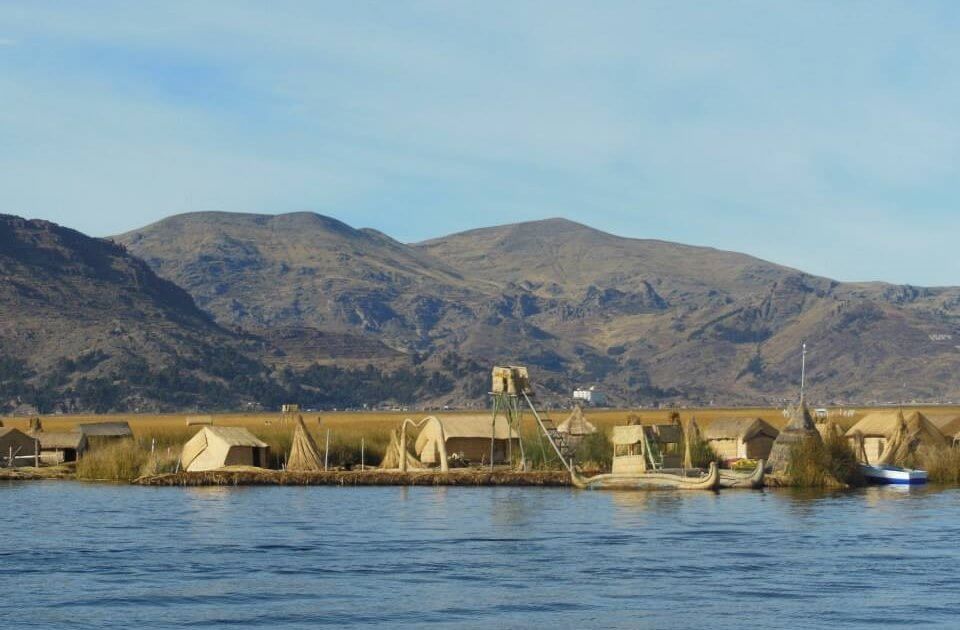
The Legend of Manco Capac and Mama Ocllo, also known as the Legend of Lake Titicaca, was first recorded by Inca Garcilaso de la Vega, the son of an Spaniard captain and the granddaughter of an Inca Emperor. It was from her side of the family where Garcilaso learned many Inca legends. In the land around Lake Titicaca (Peru and Bolivia), men lived like savages and had no religion, law, or any other form of organization. They lived in caves, gathered and hunted for food, and walked around naked as they didn’t know how to make clothes. So the god Inti (sun) had pity on them and sent his son Ayar Manco or Manco Capac and his daughter Mama Ocllo to civilize these people and form an empire that would honor him. But first Manco Capac had to find a suitable place to found a city that would be the center of the empire and the entire world. To complete this task, Inti gave Manco Capac a goldenrod. Manco Capac had to found the city in the land where the goldenrod would sink easily. One day he found a majestic valley where the goldenrod sank completely. There he founded the city of Cuzco.
A quaint account of the methods of the medicinemen of the Indians of the Peruvian Andes probably illustrates the manner in which the superstitions of a barbarian people evolve into a more stately ritual. “It cannot be denied,” it states, “that the mohanes [priests] have, by practice and tradition, acquired a knowledge of many plants and poisons, with which they effect surprising cures on the one hand, and do much mischief on the other, but the mania of ascribing the whole to a preternatural virtue occasions them to blend with their practice a thousand charms and superstitions. The most customary method of cure is to place two hammocks close to each other, either in the dwelling, or in the open air: in one of them the patient lies extended, and in the other the mohane, or agorero. The latter, in contact with the sick man, begins by rocking himself, and then proceeds, by a strain in falsetto, to call on the birds, quadrupeds, and fishes to give health to the patient. From time to time he rises on his seat, and makes a thousand extravagant gestures over the sick man, to whom he applies his powders and herbs, or sucks the wounded or diseased parts. If the malady augments, the agorero, having been joined by many of the people, chants a short hymn, addressed to the soul of the patient, with this burden: “Thou must not go, thou must not go.” In repeating this he is joined by the people, until at length a terrible clamour is raised, and augmented in proportion as the sick man becomes still fainter and fainter, to the end that it may reach his ears.

When all the charms are unavailing, and death approaches, the mohane leaps from his hammock, and betakes himself to flight, amid the multitude of sticks, stones, and clods of earth which are showered on him. Successively all those who belong to the nation assemble, and, dividing themselves into bands, each of them (if he who is in his last agonies is a warrior) approaches him, saying: “Whither goest thou? Why dost thou leave us? With whom shall we proceed to the aucas [the enemies]?’ They then relate to him the heroical deeds he has performed, the number of those he has slain, and the pleasures he leaves behind him. This is practised in different tones: while some raise the voice, it is lowered by others; and the poor sick man is obliged to support these importunities without a murmur, until the first symptoms of approaching dissolution manifest themselves. Then it is that he is surrounded by a multitude of females, some of whom forcibly close the mouth and eyes, others envelop him in the hammock, oppressing him with the whole of their weight, and causing him to expire before his time, and others, lastly, run to extinguish the candle, and dissipate the smoke, that the soul, not being able to perceive the hole through which it may escape, may remain entangled in the structure of the roof. That this may be speedily effected, and to prevent its return to the interior of the dwelling, they surround the entrances with filth, by the stench of which it may be expelled.

One of the most interesting of coastal myths, quoted by Uhle, tells how Pachacamac, having created a man and a woman, failed to provide them with food; but when the man died, the woman was aided by the Sun, who gave her a son and taught the pair to live upon wild fruits. Angered at this interference, Pachacamac killed the youth, from whose buried body sprang maize and other cultivated plants; the Sun gave the woman another son, Wichama, whereupon Pachacamac slew the mother; while Wichama, in revenge, pursued Pachacamac, driving him into the sea, and thereafter burning up the lands in passion, transformed men into stones. This legend has been interpreted as a symbol of the seasons, but it is evident that its elements belong to wide-spread American cycles, for the mother and son suggest the Chibcha goddess, Bachue, while the formation of cultivated plants from the body of the slain youth is a familiar element in myths of the tropical forests and, indeed, in both Americas.

Before Viracocha, the world was dark. Viracocha created the sun to whom he commanded to stand behind a black rock, the island of the sun emerged from Lake Titicaca. He also created the moon and the stars. Then Viracocha created the tribes of the Andes, who came out of caves, springs within their respective territories. He attributed them each a costume, language and traditions. He would follow a route from North to South, civilizing various peoples that were in the way and giving them values and techniques, bringing them from the status of wilderness to that of civilized man. Viracocha introduced himself as the son of the sun. The legends agree on the qualities of Viracocha and the natural authority he got from them. This creator god has different names depending peoples, Viracocha, but he keeps his essential attributes as a founder of civilization.

INCA RELIGION
Inca religion is centered around animistic beliefs by worshipping and having ceremonies for a variety of gods, many associated with nature. The Inca religion was extremely complex because it incorporated various ceremonies and practices. The Inca worshipped many different gods typically associated with nature, such as the sun, moon, and thunder. Viracocha is considered the god who created the earth, moon, sun, and all living beings. The Creator made the Sun, Moon, and Stars in Tiahuanaco as well, but then sent them to the Island of Titicaca to emerge there (the sun emerged at the Isla del Sol and the moon emerged at the Isla de la Luna). While the sun was rising, The Creator called to the Incas and Manco Capac telling them to worship him, and then sent them to emerge from the cave of Pacaritambo. After all of this, The Creator visited all the nations and turned the people who disobeyed him into stone.


Comments
Post a Comment